SPLEENE Talk – Which Kiteboard Size Should I Buy?
This question is not easy to answer, as it always depends on many different variable factors in kitesurfing. The kiteboard size determines how early you start planing in light wind, but of course, the kiteboard size also shows you where the limits are in the high-end range.
Better a big kite or a big kiteboard?
Although this comparison is somewhat flawed, this question can still be answered based on numerous tests. The fact is: A kitesurfer gets planing faster with a larger board than with a larger kite. Economically, it is also cheaper to invest in a large board than in a large kite.
Which Variables Should I Consider When Buying a Kiteboard?
Follow this checklist:
- Which discipline: Freeride, Freestyle, Wakestyle, Lightwind?
- What conditions will I be kiting in: Flat water, choppy water, small waves, large waves?
- How much wind is there usually at my home spot: 10 knots, 15 knots, 20 knots, 25 knots or more?
- What riding characteristics should the kiteboard have: Easy handling, comfort, pop, grip?
- How much do I weigh: 70kg, 75kg, 80kg, 85kg?
- At how many knots do I want to start planing?
Once you have answered these questions, you can start looking for the right kiteboard size.
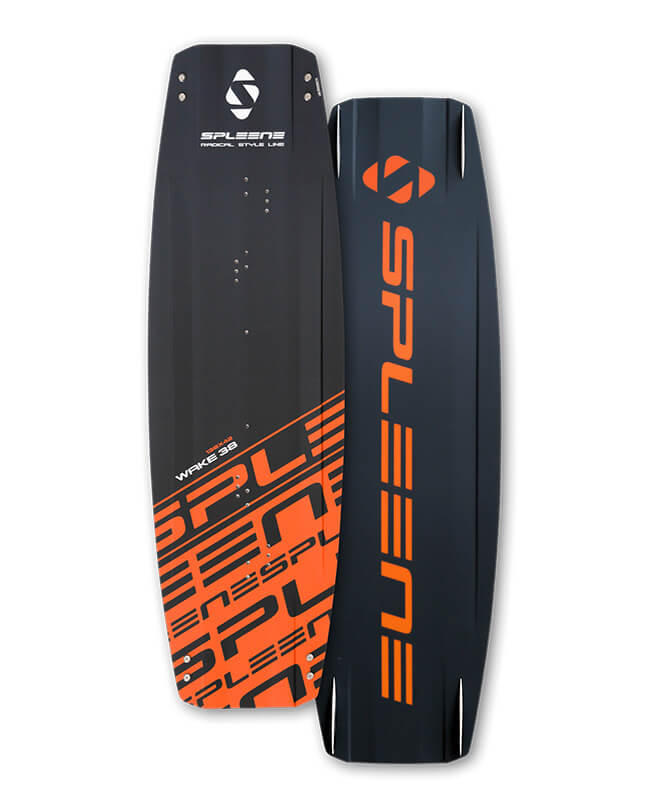
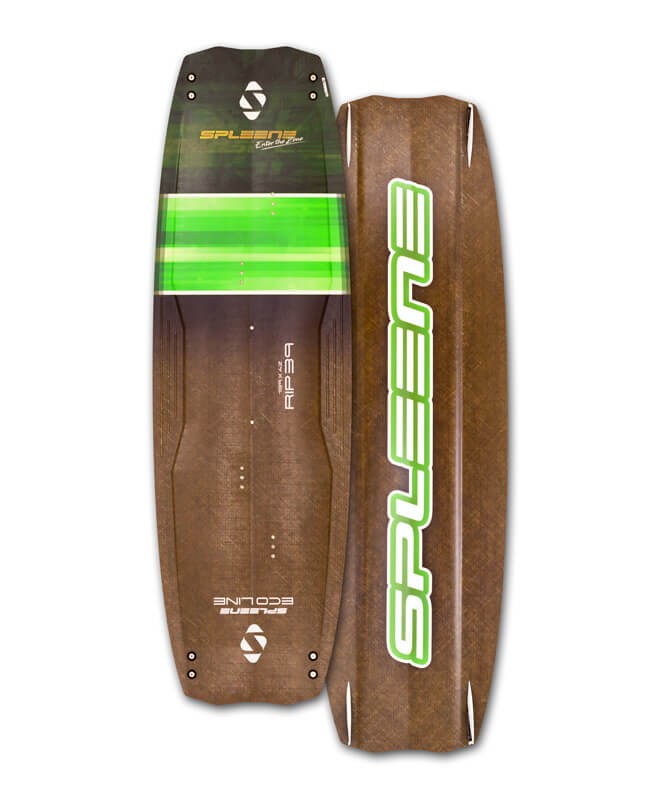
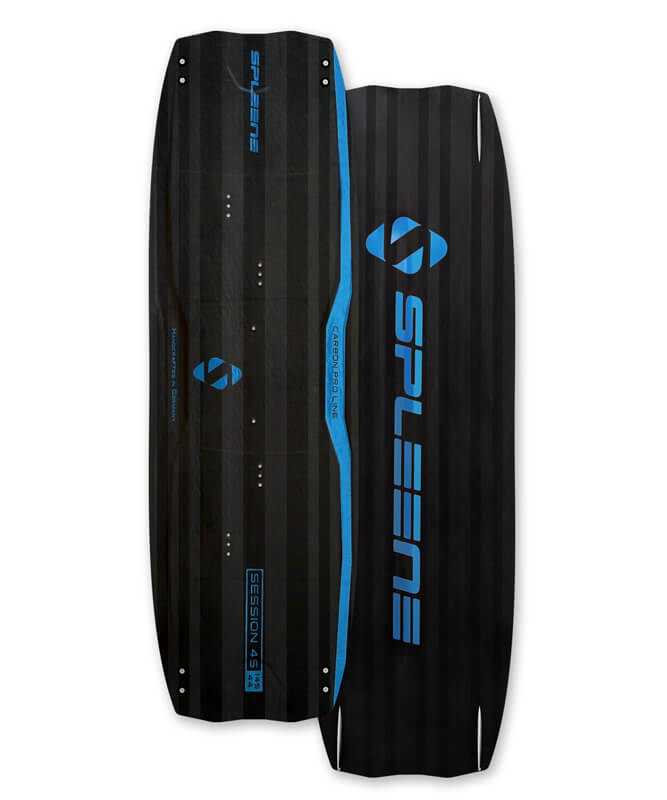
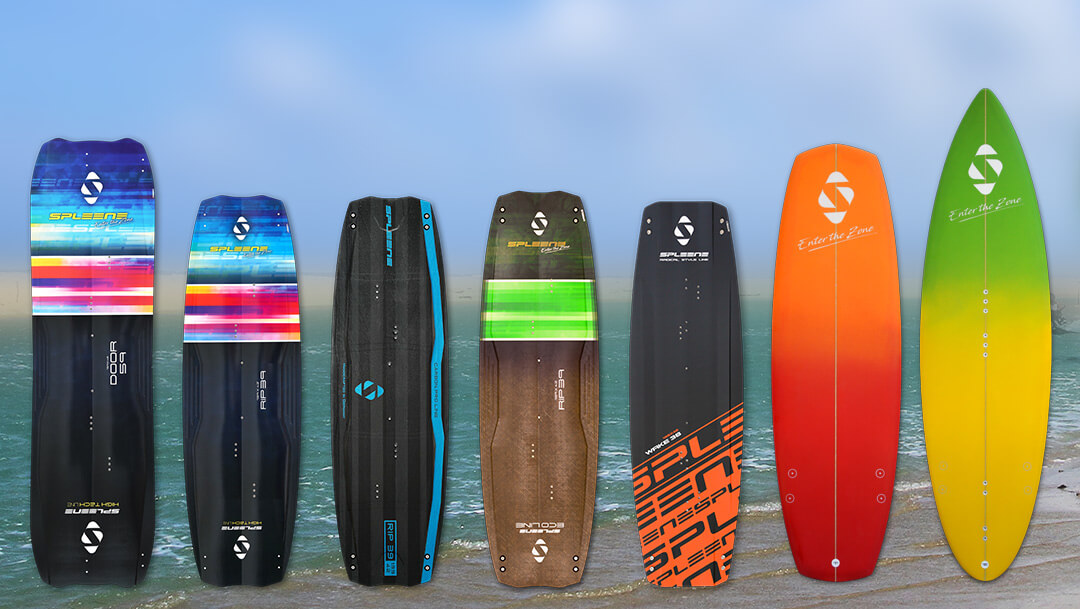
Kiteboard manufacturers differentiate their products according to the above criteria. Before choosing the kiteboard size, you need to select the type of kiteboard. In this case, we are opting for a freeride kiteboard.
The next step is to check if the kiteboard characteristics match your desired riding properties.
If the kiteboard still meets your requirements based on the mentioned characteristics, then you should take a look at the board selector. This scale indicates which kiteboard size you should choose based on your weight to ride optimally in the desired wind strength.
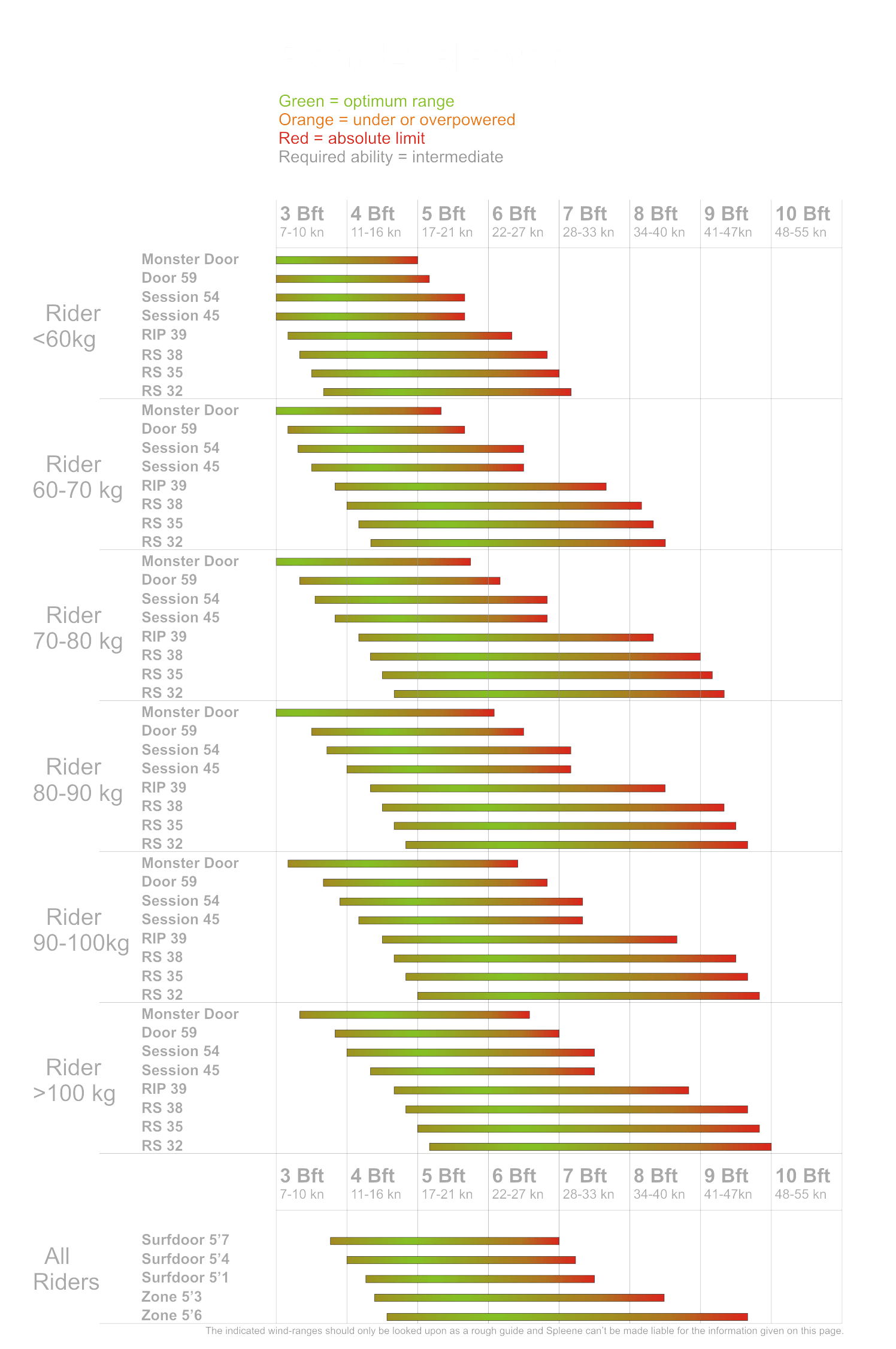
Kiteboard Size: Is Bigger Better?
Not necessarily! Of course, you can start planing earlier with a larger kiteboard, but as often in life, every advantage comes with a disadvantage. The earlier you start planing, the sooner it ends when the wind gets stronger.
A kiteboard that is too large requires extra strength in the legs. This can lead to burning thighs during longer sessions and especially when riding upwind. A larger kiteboard is also not as agile and maneuverable as smaller boards.
Men: Kiteboard Size
For men around 80kg, a kiteboard size of about 135cm to 142cm has become standard in recent years. Riders using kite boots typically use slightly larger boards than those kitesurfing with straps. The width of freeride/freestyle kiteboards is usually around 40cm +/- 3cm.

Women: Kiteboard Size
Women choose their kiteboard size primarily based on their weight. Nowadays, there are also special bindings designed for women and children.
Children: Kiteboard Size
For children, in addition to considering weight and bindings, the stance should also be considered. Special attention should be paid to the child's height. The stance refers to how far apart the foot positions are on the kiteboard. If the stance of the kiteboard is too wide, a growing young kiter might not be able to find the ideal position on the kiteboard.
Do you have any further questions about kiteboard size? Then send a message to the SPLEENE team, and we will be happy to help you.