
SPLEENE Talk – Learning to Kitesurf – The First Steps as a Kitesurfer
You've watched countless kitesurfing videos and are always excited when you stand on the shore watching the colorful kites fly in the sky? Cool kitesurfers jump meters high into the air and draw their lines on water and waves. You're eager to learn kitesurfing? But how do you actually learn kitesurfing?
How Do I Learn Kitesurfing?
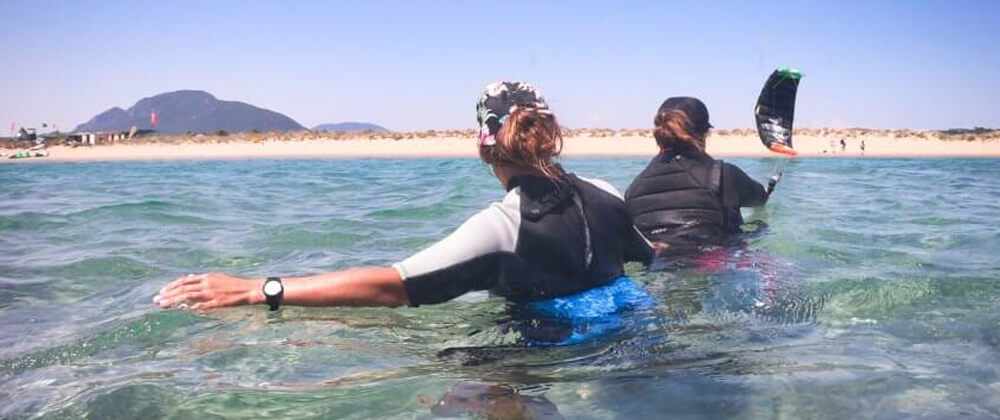
Getting started is tough, but kite schools are there to help you. Kite schools not only provide a good starting point but are essential for safely practicing this sport. Kitesurfing remains an extreme sport, so taking a course at a certified IKO or VDWS kite school is crucial. In a kite course, you'll learn the safe handling of kitesurfing equipment and step-by-step instructions on dealing with nature and extreme situations.
How Does a Kitesurfing Course Work?
A kitesurfing course consists of both theoretical and practical parts. In theory, you'll learn various terms, how the wind window operates, where in the wind window the kite is launched, what the power zone is, and how to give visual signals for launching and landing. Since kitesurfing doesn't have turn signals like traffic, all kitesurfers must also adhere to established right-of-way rules to avoid collisions and equipment damage.
Kitesurfing taster courses typically last only a few hours. As the name suggests, they provide a brief glimpse into the world of kitesurfing to assess whether you enjoy the sport.
How Long Does a Kitesurfing Course Last?
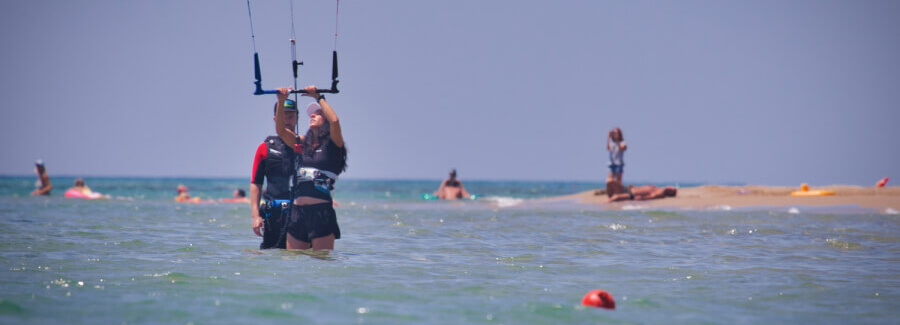
Kitesurfing courses aimed at getting you on a board typically last a minimum of three days, but they can also extend longer, including the theoretical sessions mentioned above. Initially, trainer kites are often used for the first kite flying attempts, allowing you to quickly and safely get a feel for how a kite behaves in the air, where it's launched, and where in the wind window it generates power.
Once you've mastered the safety systems, progress to water sessions begins, initially without a board, focusing on kite control and learning water relaunch techniques. Training usually takes place in shallow waters in small groups under the guidance of an instructor, allowing students to learn from others' mistakes without making them themselves.
By the third day, if students feel confident, they move onto the water with a kiteboard and kite. Some particularly talented beginners might even start gliding over the water within their first few days.
Gaining Height – Going Upwind!?
Having successfully completed a kitesurfing course and purchased your own equipment, you're probably eager to get on the water as often as possible to progress.
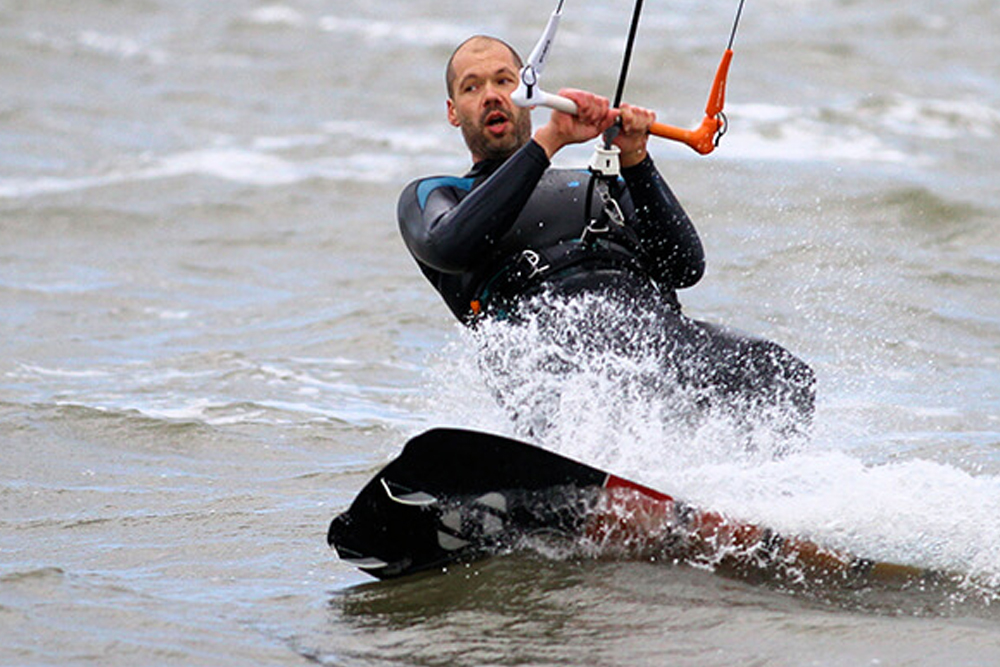
To return to your starting point after kiteboarding, you'll need to gain height or travel upwind. This is one of the biggest challenges at the beginning of a kitesurfing career. Mastering the ability to travel upwind effectively allows you to kite at spots suitable for your skill level. Until then, it's essential to practice only at spots where you can easily regain any lost height by walking.
Which Kiteschool is the Best?

Where can you find the nearest kitespot and kiteschool?
Looking for spots and schools around the globe?
Then the KiteSpot App is just right for you!
With over 8000 spots and surf centers worldwide, the KiteSpot App is your reliable companion for every session, whether you're traveling or kitesurfing at your home spot.
Featuring detailed spot pages, reviews, information on skill levels, shops and rental stations, beach and water conditions, safety warnings, amenities, and much more, this app takes the guesswork out of planning your next session – whether it's kitesurfing, wingfoiling, or windsurfing.
Download the KiteSpot App now at: www.kitespotapp.com